

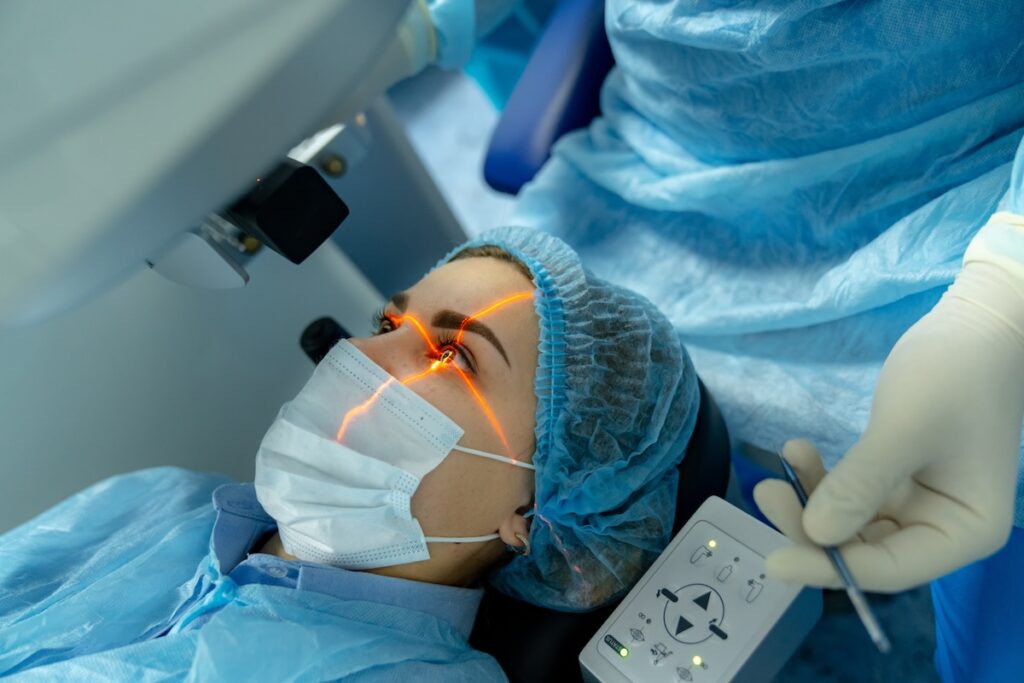
SMILE Pro Eye Surgery in Egypt 2026 | Price, Benefits, and How It Differs from LASIK
If you are considering becoming less dependent on glasses or contact lenses and are looking for advanced vision correction technologies, you will naturally hear about SMILE Pro. With terms such as LASIK, Femto-LASIK, Femto SMILE, PRK, and ICL, the real question is not simply how much the procedure costs, but whether the technology is suitable for your eyes, what makes it different, and how you can determine whether it is the medically appropriate choice.
In this comprehensive guide, we review SMILE Pro eye surgery in Egypt in 2026, starting with how the procedure works and the required examinations, followed by the procedure and recovery, and then comparing SMILE Pro with Femto-LASIK, LASIK, and PRK. We also discuss the factors that determine cost and how each case is evaluated by Professor Dr. Mohamed El-Naggar.
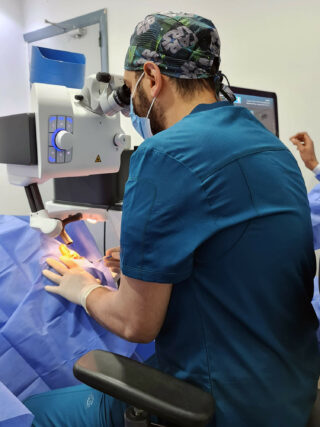
What Is SMILE Pro Eye Surgery?
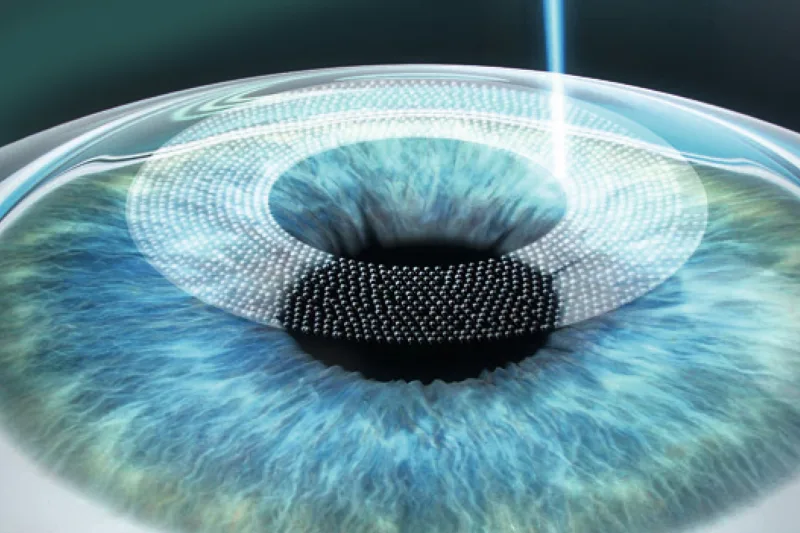
SMILE Pro is an advanced laser vision correction technique that involves creating a precisely defined piece of corneal tissue, known as a lenticule, and removing it through a small incision rather than creating a large corneal flap as in traditional LASIK. The basic principle is to reshape the cornea in a controlled manner so that light can be focused more accurately on the retina.
However, an advanced technology is not necessarily suitable for everyone. A person with myopia or astigmatism needs a comprehensive evaluation before making a decision. The refractive prescription alone is not sufficient; corneal thickness, shape and regularity, the ocular surface, dry eye status, retinal health, and the optic nerve all form part of the assessment.
For this reason, when considering SMILE Pro in Egypt in 2026, the first question should be whether the eyes are suitable. Questions about price, the laser platform, and recovery time should come afterward. When the priorities are in the right order, choosing the appropriate technology becomes much clearer.
How Does SMILE Pro Work?
The technique involves creating a precise layer of tissue within the cornea, known as a lenticule, and then accessing and removing it through a small incision. Removing this defined portion of corneal tissue changes the shape of the cornea in the manner required to correct the refractive error.
The key difference is that the procedure does not require a full flap as in LASIK. However, the speed of the laser portion does not mean that the entire treatment journey is equally fast; examination, planning, and selecting the appropriate settings for each eye are essential steps before the procedure.
The laser is only one part of the procedure, not the entire process. The decision begins with an accurate diagnosis, followed by determining whether the eye is suitable, selecting the appropriate technology and treatment plan, performing the procedure, and providing postoperative follow-up.
The Difference Between SMILE Pro, LASIK, and Femto-LASIK
The main difference lies in how the corneal tissue is treated. In LASIK, a flap is created and the laser is then used to reshape the cornea, after which the flap is repositioned. In SMILE Pro, a lenticule is created within the cornea and removed through a small incision.
| Feature | SMILE Pro | Femto-LASIK | PRK |
|---|---|---|---|
| Correction Method | Lenticule extraction through a small incision | Flap followed by corneal reshaping | Surface correction |
| Flap | No | Yes | No |
| Recovery | Relatively fast and varies by case | Relatively fast | Relatively longer |
| Suitability | Selected cases | Selected cases | Selected cases |
| Final decision | After examination | After examination | After examination |
No single technology is suitable for every patient. Femto-LASIK may be appropriate for one case, while SMILE Pro may be preferable for another, and PRK or ICL implantation may be considered in a different case. The goal is to choose the procedure that is right for the eye, rather than selecting the most popular name.

Key Benefits of SMILE Pro
Interest in SMILE Pro has increased because the technology combines refractive correction with an approach that uses a small incision instead of creating a full flap. For an appropriate candidate, this difference may be clinically relevant.
- No need to create a full corneal flap as in LASIK.
- A procedure that uses a small incision to access the lenticule.
- Rapid laser treatment time on platforms designed for this technology.
- The ability to treat myopia and astigmatism in appropriate cases.
- A relatively short recovery period for many patients.
- Avoidance of certain flap-related issues because no flap is created.
- The possibility of returning to many daily activities within a short period, according to the surgeon’s instructions.
- Treatment planning based on the characteristics of the eye rather than the spectacle prescription alone.
Who Is a Suitable Candidate for SMILE Pro?
One of the most common questions is: Am I suitable for SMILE Pro? This cannot be answered based on the refractive prescription alone. Two people with the same prescription may receive different recommendations because of differences in corneal thickness, corneal shape, dry eye status, or other factors.
| Assessment Factor | Importance |
|---|---|
| Refractive Stability | Continual changes in the prescription may affect treatment planning. |
| Corneal Thickness | A key component of assessing the safety of vision correction. |
| Corneal Shape | Irregularity may change the treatment decision. |
| Dry Eye | It may require treatment before the procedure or special follow-up. |
| Ocular Health | The retina, optic nerve, and anterior segment should be assessed. |
| Patient Expectations | They should be realistic and achievable. |
If the examinations are satisfactory and there are no contraindications, SMILE Pro can be discussed as one of the available options. If it is not suitable, this does not mean that all vision correction options are excluded; other technologies or alternative solutions may be available.
Preoperative Examinations Required Before Surgery
The preoperative assessment is more than simply measuring the refractive error. The surgeon needs a comprehensive picture of the eye because successful vision correction begins with selecting the right patient and developing the right treatment plan.
- Accurate measurement of myopia and astigmatism.
- Review of refractive stability and previous prescriptions, when available.
- Corneal imaging and topography.
- Measurement of corneal thickness and its distribution.
- Assessment of the ocular surface and dry eye.
- Examination of the anterior segment.
- Retinal and fundus examination when indicated.
- Assessment of the optic nerve and intraocular pressure as appropriate.
- Review of the medical history, previous surgeries, and medications.
- Review of contact lens use and determination of how long they should be discontinued before examination, if required.
The refractive prescription may appear suitable while corneal mapping reveals that another technology is more appropriate. Therefore, a definitive decision cannot be made through a message or phone call without an examination.
SMILE Pro Procedure Steps in Detail
Once the decision is made, the treatment journey proceeds through several stages. The patient sees the laser treatment itself, but an important part of the planning takes place before entering the operating room.
Final Assessment
Review of the examinations and confirmation of the treatment plan for each eye.
Eye Preparation
Sterilization, preparation, and topical anesthesia with eye drops.
Eye Stabilization
Positioning the eye for treatment according to the system being used.
Lenticule Creation
Creation of the precisely planned corneal lenticule.
Incision Creation
Creation of a small incision to access the tissue.
Lenticule Extraction
Separation and careful removal of the defined tissue.
Completion of the Procedure
Examination of the eye and prescription of postoperative drops and instructions.
Follow-Up
Follow-up appointments to monitor recovery and visual stability.
Is SMILE Pro Painful?
The procedure is performed under topical anesthesia with eye drops, so the goal is for the patient not to experience pain during the main part of the procedure. Some patients may feel pressure or an unusual sensation at certain moments, but the experience varies from person to person.
After the procedure, there may be burning, tearing, light sensitivity, or a foreign-body sensation to varying degrees. The surgeon will prescribe appropriate treatment. It is important not to rub the eye or use additional eye drops without medical advice.
Recovery After SMILE Pro
Recovery is one of the most important points of comparison. Vision improves within a short period for many patients, but the time required to reach stable vision varies. Some patients notice significant early improvement, while others need more time for dry eye symptoms to settle and vision to stabilize.
| Period | What May Occur | Advice |
|---|---|---|
| Day of Surgery | Blurred vision, tearing, or light sensitivity | Rest and adherence to prescribed drops |
| The Following Day | Noticeable improvement in many patients | Attend follow-up and do not drive until cleared |
| First Few Days | Mild fluctuation or dryness | Follow treatment instructions and avoid rubbing the eye |
| First Few Weeks | Gradual stabilization | Reduce factors that worsen dryness and attend follow-up |
| Afterward | Greater stability | Consult the surgeon if any unusual symptoms occur |
Working at a computer does not automatically cause harm, but eye strain and dryness may be more noticeable initially. Take regular breaks, reduce prolonged screen sessions, and use the drops prescribed by your surgeon.
Swimming, vigorous sports, and activities that may expose the eye to contact or dust require specific guidance. There is no single timetable that applies to everyone; the surgeon’s instructions are the reference.
SMILE Pro Eye Surgery Price in Egypt 2026
There is no single fixed price for all patients. The cost varies according to the laser platform and technology, examinations, the nature of the case, included services, and follow-up.
The indicative price of SMILE Pro in Egypt may be approximately EGP 40,000 to 65,000 for both eyes, but this is not a fixed final price at any particular center. The actual price should be confirmed after examination and after clarifying what is included in the package.
| Factor | Impact on Cost |
|---|---|
| Type of Technology | SMILE Pro differs from LASIK, Femto-LASIK, and PRK. |
| Laser Platform | The type of platform and equipment may affect the cost. |
| Examinations | Some packages include them, while others charge for them separately. |
| Nature of the Case | Some cases may require additional assessments. |
| Follow-Up | Follow-up program details vary. |
| Additional Services | Medications and certain supplies may be included in the price or charged separately. |
When asking about the price, ask whether the amount covers both eyes, whether the examination is included, whether follow-up is included, whether medications are included, and which technology and laser platform are being used. This makes comparisons more accurate.
Comparison of Different Vision Correction Technologies
Having multiple technologies available is not a problem; it gives the surgeon more flexibility to select the appropriate procedure. The following table is for educational purposes and does not determine which procedure you should undergo.
| Technology | Principle | Recovery | Flap | Note |
|---|---|---|---|---|
| LASIK | Flap followed by corneal reshaping | Relatively fast | Yes | Common technique |
| Femto-LASIK | Femtosecond flap followed by correction | Relatively fast | Yes | Precision in flap creation |
| SMILE | Lenticule extraction through a small incision | Relatively fast | No | Selected cases |
| SMILE Pro | An evolution of the SMILE platform | Relatively fast | No | Requires suitability assessment |
| PRK | Surface correction | Relatively longer | No | An option for selected cases |
| ICL | Intraocular lens | Case dependent | Not applicable | A non-corneal laser alternative |
The right question is not: What is the most popular procedure? It is: Which procedure is compatible with my eye measurements?
Does SMILE Pro Treat Astigmatism?
SMILE Pro can be used to correct astigmatism in cases that fall within the technology’s treatment range and safety criteria. However, the term astigmatism alone is not enough; the degree and regularity of astigmatism and the associated corneal characteristics all matter.
During the examination, the degree and axis of astigmatism, as well as corneal shape and thickness, are assessed. Therefore, if you have astigmatism and are considering SMILE Pro, the answer should be based on your specific eye measurements rather than on the technology in general.
SMILE Pro and High Degrees of Myopia
The higher the degree of myopia, the more important a detailed corneal assessment becomes. This does not mean that all high prescriptions are unsuitable for correction; rather, the surgeon must compare the amount of correction required with the characteristics of the cornea.
SMILE Pro may be an option for some patients, while another technology may be more appropriate for others. In certain cases, ICL implantation may be discussed. The goal is to protect the eye and achieve the appropriate degree of correction, not to perform laser treatment at all costs.
SMILE Pro and Keratoconus
Keratoconus or suspected corneal irregularity requires specialist assessment before considering laser vision correction. An abnormal corneal shape may completely change the treatment decision.
If corneal mapping shows findings that require further evaluation, the decision should not be based on the refractive prescription alone. In such cases, corneal safety takes priority over becoming less dependent on glasses.
SMILE Pro and Dry Eye
Dry eye is an important consideration before any vision correction procedure. It may be mild and manageable, or it may be significant enough to require treatment and optimization of the ocular surface before a decision is made.
Temporary dry eye symptoms may occur after surgery to varying degrees, so the surgeon may prescribe lubricating drops or other treatment. Do not use unprescribed eye drops for prolonged periods on your own.
Night Vision After SMILE Pro
Night vision quality depends on corneal shape, the degree of correction, pupil size, the ocular surface, and other factors. Therefore, one guarantee cannot apply to all patients.
Some people may experience halos or glare during the early period, which is monitored as the ocular surface improves and vision stabilizes. If symptoms are severe or persistent, the patient should consult the surgeon.
Can You Need Glasses Again After the Procedure?
The goal of the procedure is to reduce dependence on glasses, but future freedom from glasses cannot be guaranteed. Refractive changes may occur, as can age-related changes such as difficulty with near vision.
Needing glasses in the future does not necessarily mean that the procedure has failed. What matters is evaluating the reason for the change and monitoring it medically.
When Can I Return to Work, Sports, and Driving?
| Activity | After-Surgery Guidance |
|---|---|
| Office Work | Return according to visual clarity and the surgeon’s instructions, with regular screen breaks. |
| Prolonged Computer Use | Reduce screen time initially and take more frequent breaks. |
| Driving | Do not drive until vision is clear and the surgeon gives permission. |
| Vigorous Sports | Postpone until cleared by the surgeon. |
| Swimming | Postpone for the period specified by the surgeon. |
| Working in Dusty Environments | Use caution and follow instructions; a longer period may be required. |
The goal is not to prevent the patient from returning to normal life, but to give the eye adequate time to recover and protect it from contact, contamination, and dryness during the early period.
Professor Dr. Mohamed El-Naggar and Vision Correction
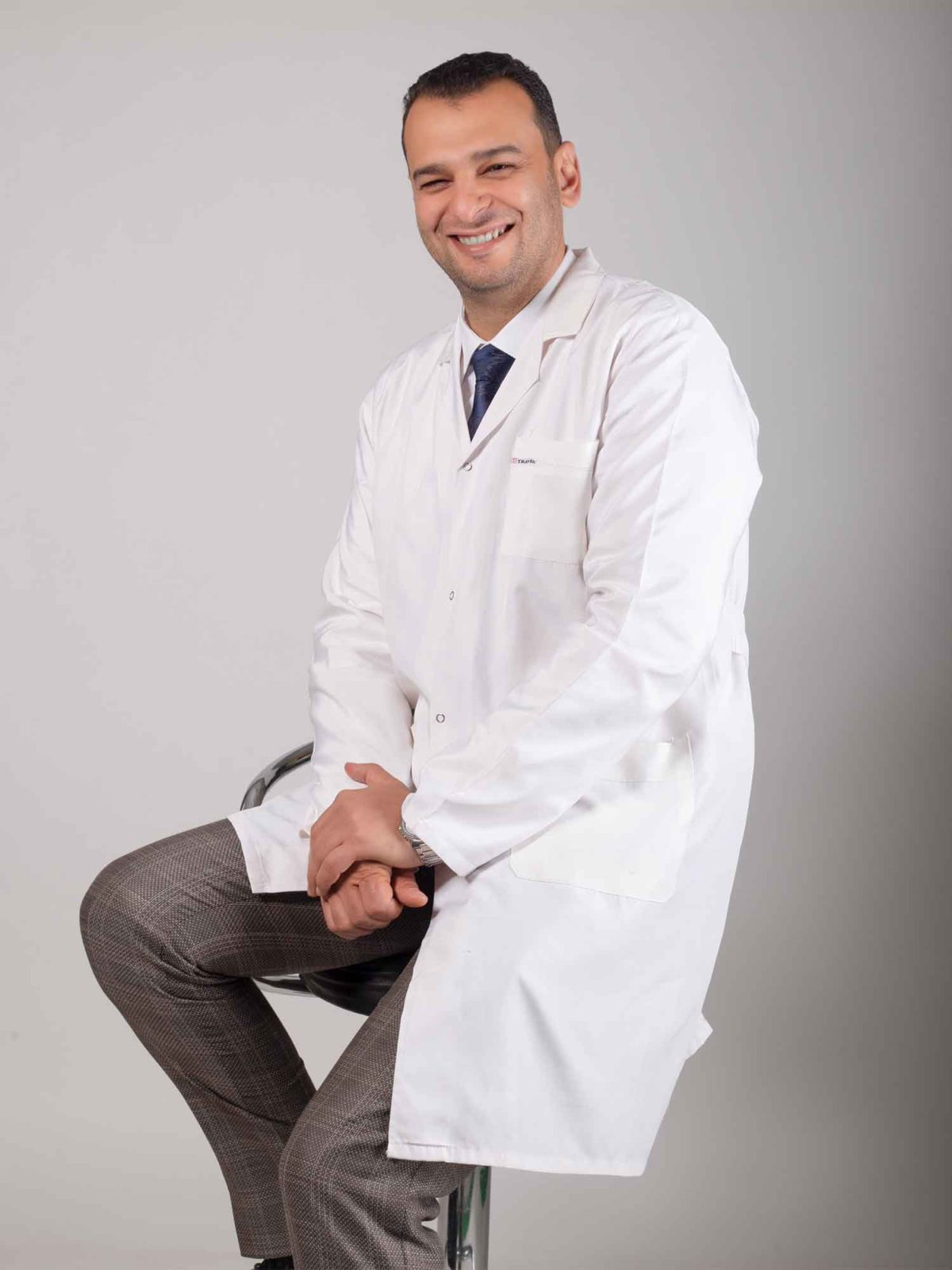
Prof. Dr. Mohamed El-Naggar
Professor Dr. Mohamed El-Naggar is a consultant in corneal surgery and Femto-LASIK and the founder of Jazirat Al Arab Eye and Femto-LASIK Center. The center provides specialized services in vision correction, corneal surgery, cataract surgery, lens implantation, and other ophthalmic medical and surgical services.
For vision correction cases, the plan begins with a comprehensive eye assessment followed by selection of the appropriate technology. A patient may arrive specifically requesting SMILE Pro, but the examination may confirm that it is suitable or indicate that another technology would be more appropriate. The important point is that the decision should be based on the characteristics of the eye.
- Comprehensive examination before selecting the technology.
- Assessment of the cornea, its thickness, and its topography.
- Comparison of the options appropriate for the case.
- Explanation of the procedure and realistic expectations.
- Postoperative follow-up according to the surgeon’s plan.
How Do You Choose the Right Surgeon and Center?
Choosing a surgeon should not be based on price alone. Ask about the surgeon’s specialty, examinations, equipment, alternatives, follow-up, and what is included in the price. A good surgeon does not pressure the patient to choose a particular technology; instead, they explain why it may be suitable or why another option may be better for the patient’s condition.
- Is a comprehensive examination performed before the decision?
- Are corneal shape and thickness assessed?
- Are alternatives available if SMILE Pro is not suitable?
- Is the follow-up plan clear and well defined?
- Does the price include examinations, medications, and follow-up?
- Is the center equipped with the technology it advertises?
Frequently Asked Questions About SMILE Pro in Egypt 2026
What is SMILE Pro?
It is a vision correction technique that creates a lenticule within the cornea and removes it through a small incision.
How much does SMILE Pro cost in Egypt in 2026?
The indicative price may range from EGP 40,000 to 65,000 for both eyes, but the actual price depends on the center, the patient’s condition, and what is included.
Does the price include the examinations?
Not necessarily; ask for the details of the package.
Is SMILE Pro better than Femto-LASIK?
There is no single answer for every patient. The choice depends on the eye examinations.
Is the procedure painful?
It is performed under topical anesthesia with eye drops, and the patient may feel pressure or an unusual sensation.
When does vision improve?
Early improvement is common, but final visual stabilization varies from person to person.
Does it treat astigmatism?
It can be corrected in suitable cases after assessing the degree, axis, and cornea.
Is it suitable for high myopia?
It may be suitable for some cases, while others may require a different technology or ICL.
Is it suitable for keratoconus?
Keratoconus requires specialist assessment, and laser procedures may not be suitable in some cases.
Can both eyes be treated on the same day?
This is possible in many cases if both eyes are suitable, but the final decision rests with the surgeon.
Will I need glasses after the procedure?
The goal is to reduce dependence on glasses, but the patient may need them in the future because of refractive changes or age-related changes.
When can I return to work?
It depends on the nature of the work and how quickly vision improves; office work usually allows an earlier return.
Can I use my phone?
Yes, according to the surgeon’s instructions, while limiting prolonged sessions and taking breaks.
Can I drive?
Only after vision is clear and the surgeon gives medical clearance.
Are the results permanent?
The correction is relatively stable, but the eye may change in the future, making follow-up important.
Can I request SMILE Pro directly?
You can ask to discuss it, but the surgeon determines whether it is suitable after examination.
A Practical Guide Before Booking SMILE Pro
Before booking the procedure, it is helpful to view it as a medical journey rather than simply a laser appointment. Write down all the questions you want answered, and bring previous refractive measurements, corneal maps, or older reports. If you wear contact lenses, tell the surgeon what type you use and how long you have been wearing them, because some lenses can affect measurements and may need to be discontinued for a specific period before examination.
If you have eye allergies or recurrent itching, tell the surgeon. Persistent eye rubbing and an unstable ocular surface may require treatment before deciding on vision correction. Also inform the surgeon about any previous eye surgeries, injuries, or medications you use regularly. This information helps build a complete picture of your condition.
Do not compare yourself with a friend who underwent a different procedure. Even if the refractive prescription is similar, corneal thickness, corneal shape, dry eye status, age, and occupation may differ. Therefore, one person’s experience cannot be transferred to another person as an expected outcome.
It is useful to ask the surgeon a direct question: What is the medical reason for recommending this technology for me? If the answer is based on your eye measurements, corneal map, refractive error, and clinical characteristics, you understand the basis of the decision. If the technology is not suitable, ask about the alternatives and why they were chosen.
After surgery, do not let rapid visual improvement become a reason to skip follow-up. Some aspects cannot be adequately assessed by the patient alone; the surgeon can monitor the ocular surface, healing, and visual stability. Unusual symptoms do not necessarily mean that a serious problem exists, but they warrant contacting the center rather than waiting or using treatment on your own.
Does a Faster Procedure Mean Faster Results?
It is easy to associate faster laser treatment with faster recovery, but it is not that simple. A short procedure time does not mean that every eye will reach final vision at the same time. The response varies according to the ocular surface, degree of correction, corneal characteristics, and other factors.
Therefore, when you hear that the procedure takes only a short time, understand what that means: there is a difference between the procedure time itself and the patient’s overall journey from examination to recovery and stabilization.
Why Do Patient Outcomes Differ?
Differences in outcomes do not necessarily indicate differences in procedure quality. Eyes differ from one person to another, as do refractive errors, ocular surface status, and corneal characteristics. Adherence to prescribed drops and postoperative instructions can also affect comfort and the speed of recovery.
For this reason, outcomes should be evaluated in the context of the patient’s original condition rather than by direct comparison with another person.
Why Is Postoperative Follow-Up Important?
Follow-up allows the surgeon to confirm that the eye is healing normally and to assess the ocular surface, vision, and any new symptoms. It also provides an opportunity to adjust treatment if needed.
A patient who feels that the eye is doing very well should not assume that the follow-up visit is no longer necessary. Keeping the scheduled appointment is part of the treatment plan.
What If I Am Not Suitable for SMILE Pro?
Not being suitable for SMILE Pro does not mean that there are no solutions. Femto-LASIK, PRK, or another technology may be considered depending on the measurements, and in some cases lens implantation may be discussed.
The important point is not to change the medical decision simply to satisfy a patient’s preference for a particular technology. The right technology is the one that is compatible with the eye.
Can I Choose the Procedure Based on Price?
Price is important for financial planning, but it is not a sufficient medical criterion. When comparing two centers, compare what you receive for the price: examinations, technology, equipment, surgeon experience, follow-up, medications, and other services.
Two prices may differ because the packages are different, not because one center is unnecessarily more expensive.
Considering SMILE Pro?
Start with the right step: a comprehensive eye examination and a discussion with Professor Dr. Mohamed El-Naggar about the technology most appropriate for your case.
Book Your Appointment with Professor Dr. Mohamed El-Naggar
To inquire about SMILE Pro, the appropriate examinations, or the technology most suitable for your case, contact Dr. Mohamed El-Naggar’s Eye Center.
Phone: 00201140011556
WhatsApp: +201140011556
Mohandessin Clinic: 24 Gezirat Al Arab Street – Mohandessin
Fifth Settlement Clinic: 437 North Teseen Street
Psychological Preparation for the Procedure
It is natural to feel anxious before any eye procedure, especially when you hear the words laser or surgery. However, understanding the steps can greatly reduce anxiety. Ask about the anesthesia, what you may see or feel during the procedure, when vision is expected to begin improving, and which symptoms are expected after returning home. There is no benefit in keeping your concerns to yourself; the better you understand the plan, the easier it will be to follow it.
Also, do not enter the procedure expecting a perfect visual result within the first hour. The eye needs time to settle, and vision may fluctuate during the early period. The outcome should be assessed according to the follow-up schedule set by the surgeon, not based on the experience of the first night.
The Relationship Between Refractive Error and the Cornea
A patient may think that the number on the spectacle prescription is the main factor in choosing a procedure. In reality, the refractive error tells us how much correction is required, but it does not by itself tell us whether the cornea is suitable. This is why corneal mapping and thickness measurement are important parts of the examination.
If the cornea is regular, its thickness is appropriate, and the other examinations are reassuring, the available technologies can be discussed. If findings requiring caution are identified, the decision may change. This explains why two people with the same prescription may be candidates for different technologies.
Visual Quality Is More Than Visual Acuity
When a patient says, “I want 6/6 vision,” this expresses an understandable goal, but everyday visual quality is broader than a number on an eye chart. It includes night vision, contrast, halos, glare, comfort, dry eye, and the ability to perform daily activities. That is why the surgeon considers all of these aspects when evaluating a patient.
In some cases, very clear vision may be achievable, but the patient may need time before the eye feels completely normal. In other cases, temporary symptoms may occur and improve with time. The important thing is to understand what to expect and when to consult the surgeon.
The Importance of Choosing a Well-Equipped Center
Advanced technology requires appropriate equipment and a team familiar with the procedure. Therefore, when choosing a vision correction center, do not ask only about the name of the procedure; ask about the laser platform, examination system, follow-up process, and how the center manages cases that are not suitable for the procedure.
Having alternative treatment options available through the center or surgeon helps prevent patients from being pushed toward a technology that is not suitable for them. A patient needs a plan, not a specific procedure at any cost.
The Right Decision Is Not Made from an Advertisement
Advertisements are useful for introducing people to technologies and services, but they cannot replace an examination. Statements such as “the latest technology” or “the fastest procedure” do not answer the most important question: Is your eye suitable?
When you visit the surgeon, ask for a clear explanation of your examination results. If another technology is being considered, ask why it was selected. This way, the decision is based on understandable medical information rather than advertising impressions alone.
After the Procedure: When Should I Contact the Surgeon?
Mild symptoms such as tearing, sensitivity, or a gritty sensation may occur early in recovery. However, severe pain, a significant reduction in vision, unusual discharge, severe or increasing redness, or any change that concerns you warrants prompt contact with the surgeon.
Do not try to diagnose yourself based on other people’s experiences or random online searches. The eye is sensitive, and contacting the center promptly is better than waiting when an unusual symptom occurs.
SMILE Pro and Lifestyle
SMILE Pro may be an attractive option for someone who participates in sports or dislikes wearing glasses, but lifestyle alone is not enough to determine the appropriate technology. It is considered as part of the overall picture after an eye examination.
If your work involves night driving, prolonged screen time, or exposure to dust, tell the surgeon. These details help with discussing expectations and postoperative instructions.
What Does Choosing the Right Technology Mean?
Choosing the right technology means that the surgeon balances the required degree of correction with corneal characteristics, ocular surface condition, age, lifestyle, and expectations. The option you prefer may seem logical from the outside, but the examination may reveal that another option is more suitable.
For this reason, it is important for the surgeon to be able to discuss more than one technology and explain why one option suits you better than another. This approach makes the patient a partner in the decision rather than simply the recipient of a predetermined procedure.
Psychological Preparation for the Procedure
It is natural to feel anxious before any eye procedure, especially when you hear the words laser or surgery. However, understanding the steps can greatly reduce anxiety. Ask about the anesthesia, what you may see or feel during the procedure, when vision is expected to begin improving, and which symptoms are expected after returning home. There is no benefit in keeping your concerns to yourself; the better you understand the plan, the easier it will be to follow it.
Also, do not enter the procedure expecting a perfect visual result within the first hour. The eye needs time to settle, and vision may fluctuate during the early period. The outcome should be assessed according to the follow-up schedule set by the surgeon, not based on the experience of the first night.
The Relationship Between Refractive Error and the Cornea
A patient may think that the number on the spectacle prescription is the main factor in choosing a procedure. In reality, the refractive error tells us how much correction is required, but it does not by itself tell us whether the cornea is suitable. This is why corneal mapping and thickness measurement are important parts of the examination.
If the cornea is regular, its thickness is appropriate, and the other examinations are reassuring, the available technologies can be discussed. If findings requiring caution are identified, the decision may change. This explains why two people with the same prescription may be candidates for different technologies.
Visual Quality Is More Than Visual Acuity
When a patient says, “I want 6/6 vision,” this expresses an understandable goal, but everyday visual quality is broader than a number on an eye chart. It includes night vision, contrast, halos, glare, comfort, dry eye, and the ability to perform daily activities. That is why the surgeon considers all of these aspects when evaluating a patient.
In some cases, very clear vision may be achievable, but the patient may need time before the eye feels completely normal. In other cases, temporary symptoms may occur and improve with time. The important thing is to understand what to expect and when to consult the surgeon.
The Importance of Choosing a Well-Equipped Center
Advanced technology requires appropriate equipment and a team familiar with the procedure. Therefore, when choosing a vision correction center, do not ask only about the name of the procedure; ask about the laser platform, examination system, follow-up process, and how the center manages cases that are not suitable for the procedure.
Having alternative treatment options available through the center or surgeon helps prevent patients from being pushed toward a technology that is not suitable for them. A patient needs a plan, not a specific procedure at any cost.
The Right Decision Is Not Made from an Advertisement
Advertisements are useful for introducing people to technologies and services, but they cannot replace an examination. Statements such as “the latest technology” or “the fastest procedure” do not answer the most important question: Is your eye suitable?
When you visit the surgeon, ask for a clear explanation of your examination results. If another technology is being considered, ask why it was selected. This way, the decision is based on understandable medical information rather than advertising impressions alone.
After the Procedure: When Should I Contact the Surgeon?
Mild symptoms such as tearing, sensitivity, or a gritty sensation may occur early in recovery. However, severe pain, a significant reduction in vision, unusual discharge, severe or increasing redness, or any change that concerns you warrants prompt contact with the surgeon.
Do not try to diagnose yourself based on other people’s experiences or random online searches. The eye is sensitive, and contacting the center promptly is better than waiting when an unusual symptom occurs.
SMILE Pro and Lifestyle
SMILE Pro may be an attractive option for someone who participates in sports or dislikes wearing glasses, but lifestyle alone is not enough to determine the appropriate technology. It is considered as part of the overall picture after an eye examination.
If your work involves night driving, prolonged screen time, or exposure to dust, tell the surgeon. These details help with discussing expectations and postoperative instructions.
What Does Choosing the Right Technology Mean?
Choosing the right technology means that the surgeon balances the required degree of correction with corneal characteristics, ocular surface condition, age, lifestyle, and expectations. The option you prefer may seem logical from the outside, but the examination may reveal that another option is more suitable.
For this reason, it is important for the surgeon to be able to discuss more than one technology and explain why one option suits you better than another. This approach makes the patient a partner in the decision rather than simply the recipient of a predetermined procedure.
Psychological Preparation for the Procedure
It is natural to feel anxious before any eye procedure, especially when you hear the words laser or surgery. However, understanding the steps can greatly reduce anxiety. Ask about the anesthesia, what you may see or feel during the procedure, when vision is expected to begin improving, and which symptoms are expected after returning home. There is no benefit in keeping your concerns to yourself; the better you understand the plan, the easier it will be to follow it.
Also, do not enter the procedure expecting a perfect visual result within the first hour. The eye needs time to settle, and vision may fluctuate during the early period. The outcome should be assessed according to the follow-up schedule set by the surgeon, not based on the experience of the first night.
The Relationship Between Refractive Error and the Cornea
A patient may think that the number on the spectacle prescription is the main factor in choosing a procedure. In reality, the refractive error tells us how much correction is required, but it does not by itself tell us whether the cornea is suitable. This is why corneal mapping and thickness measurement are important parts of the examination.
If the cornea is regular, its thickness is appropriate, and the other examinations are reassuring, the available technologies can be discussed. If findings requiring caution are identified, the decision may change. This explains why two people with the same prescription may be candidates for different technologies.
Visual Quality Is More Than Visual Acuity
When a patient says, “I want 6/6 vision,” this expresses an understandable goal, but everyday visual quality is broader than a number on an eye chart. It includes night vision, contrast, halos, glare, comfort, dry eye, and the ability to perform daily activities. That is why the surgeon considers all of these aspects when evaluating a patient.
In some cases, very clear vision may be achievable, but the patient may need time before the eye feels completely normal. In other cases, temporary symptoms may occur and improve with time. The important thing is to understand what to expect and when to consult the surgeon.
The Importance of Choosing a Well-Equipped Center
Advanced technology requires appropriate equipment and a team familiar with the procedure. Therefore, when choosing a vision correction center, do not ask only about the name of the procedure; ask about the laser platform, examination system, follow-up process, and how the center manages cases that are not suitable for the procedure.
Having alternative treatment options available through the center or surgeon helps prevent patients from being pushed toward a technology that is not suitable for them. A patient needs a plan, not a specific procedure at any cost.
The Right Decision Is Not Made from an Advertisement
Advertisements are useful for introducing people to technologies and services, but they cannot replace an examination. Statements such as “the latest technology” or “the fastest procedure” do not answer the most important question: Is your eye suitable?
When you visit the surgeon, ask for a clear explanation of your examination results. If another technology is being considered, ask why it was selected. This way, the decision is based on understandable medical information rather than advertising impressions alone.
After the Procedure: When Should I Contact the Surgeon?
Mild symptoms such as tearing, sensitivity, or a gritty sensation may occur early in recovery. However, severe pain, a significant reduction in vision, unusual discharge, severe or increasing redness, or any change that concerns you warrants prompt contact with the surgeon.
Do not try to diagnose yourself based on other people’s experiences or random online searches. The eye is sensitive, and contacting the center promptly is better than waiting when an unusual symptom occurs.
SMILE Pro and Lifestyle
SMILE Pro may be an attractive option for someone who participates in sports or dislikes wearing glasses, but lifestyle alone is not enough to determine the appropriate technology. It is considered as part of the overall picture after an eye examination.
If your work involves night driving, prolonged screen time, or exposure to dust, tell the surgeon. These details help with discussing expectations and postoperative instructions.
What Does Choosing the Right Technology Mean?
Choosing the right technology means that the surgeon balances the required degree of correction with corneal characteristics, ocular surface condition, age, lifestyle, and expectations. The option you prefer may seem logical from the outside, but the examination may reveal that another option is more suitable.
For this reason, it is important for the surgeon to be able to discuss more than one technology and explain why one option suits you better than another. This approach makes the patient a partner in the decision rather than simply the recipient of a predetermined procedure.
Psychological Preparation for the Procedure
It is natural to feel anxious before any eye procedure, especially when you hear the words laser or surgery. However, understanding the steps can greatly reduce anxiety. Ask about the anesthesia, what you may see or feel during the procedure, when vision is expected to begin improving, and which symptoms are expected after returning home. There is no benefit in keeping your concerns to yourself; the better you understand the plan, the easier it will be to follow it.
Also, do not enter the procedure expecting a perfect visual result within the first hour. The eye needs time to settle, and vision may fluctuate during the early period. The outcome should be assessed according to the follow-up schedule set by the surgeon, not based on the experience of the first night.
The Relationship Between Refractive Error and the Cornea
A patient may think that the number on the spectacle prescription is the main factor in choosing a procedure. In reality, the refractive error tells us how much correction is required, but it does not by itself tell us whether the cornea is suitable. This is why corneal mapping and thickness measurement are important parts of the examination.
If the cornea is regular, its thickness is appropriate, and the other examinations are reassuring, the available technologies can be discussed. If findings requiring caution are identified, the decision may change. This explains why two people with the same prescription may be candidates for different technologies.
Visual Quality Is More Than Visual Acuity
When a patient says, “I want 6/6 vision,” this expresses an understandable goal, but everyday visual quality is broader than a number on an eye chart. It includes night vision, contrast, halos, glare, comfort, dry eye, and the ability to perform daily activities. That is why the surgeon considers all of these aspects when evaluating a patient.
In some cases, very clear vision may be achievable, but the patient may need time before the eye feels completely normal. In other cases, temporary symptoms may occur and improve with time. The important thing is to understand what to expect and when to consult the surgeon.
Leave A Comment