

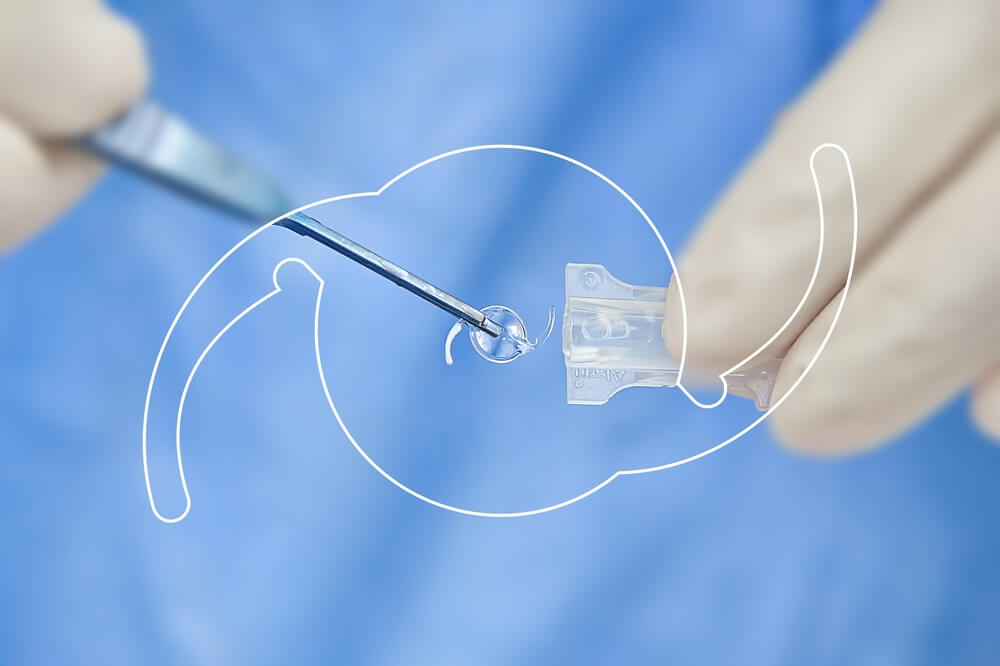
Lens Implantation for Correcting Vision Defects
If you suffer from poor vision at high degrees or have been told that you are not suitable for LASIK or Femto-LASIK procedures, lens implantation for correcting vision may be the appropriate solution to restore clear vision and reduce dependence on glasses and medical contact lenses. At Dr. Mohamed El Naggar Eye Center, we provide the latest lens implantation techniques using advanced diagnostic devices and treatment plans customized for each case.
Has the quality of your vision noticeably deteriorated recently? And has your doctor told you that you are not eligible for laser vision correction surgery? If you answered yes, the situation is not that bad. On the contrary, there is an opportunity to undergo a modern, advanced, and safe treatment that often surpasses laser procedures, namely lens implantation for correcting vision, which works to improve the quality of vision, focusing, and daily tasks. It is available at Dr. Mohamed El Naggar Center with the latest and most effective types of lenses. We will learn about the types of these lenses, their characteristics, and the differences between them in this comprehensive guide. We wish you an enjoyable reading.
What Is the Lens Implantation Procedure for Correcting Vision?
The lens implantation procedure for correcting vision is known as an advanced therapeutic procedure and a simple surgery, in which an artificial lens is implanted inside the eye while preserving the original lens.
This procedure is characterized as completely safe, and no part inside the eye is affected during it.
The main goal of the procedure is to correct refractive vision problems, such as myopia, hyperopia, and astigmatism.
There are two types of this procedure: the first type involves removing the original lens affected by cataract, while the second type involves implanting the new lens in front of the original lens to improve vision.
Artificial lenses are often manufactured specifically for each patient individually, and there are many types of lenses that we will learn about later.
These lenses are also made of high-quality materials that are completely safe for human tissues.
These materials include silicone and acrylic, and the final lens is covered with a protective layer against ultraviolet rays that is completely compatible with the tissues of the eye.
The Pathological Mechanism of Injury to the Eye Lens
Many patients wonder why the patient needs to undergo the lens implantation procedure for correcting vision. By understanding the changes that occur in the lens, this can be understood.
The natural lens of the eye is one of the most important parts of the eye after the cornea. It is responsible for collecting the incoming light rays into the eye and then directing them toward the retina, which works to translate the light rays into a clear image.
However, with the passage of time and advancing age, natural changes occur in the structure of the original eye lens, which is originally composed of water and protein.
These changes cause the accumulation of proteins and cells in the form of opaque spots that affect the transparency and clarity of the eye and cause gradual weakening of vision, which is called cataract disease. It is considered one of the most common diseases among the elderly and is the fundamental reason for performing lens implantation surgery.
Types of Lens Implantation Procedure Inside the Eye
In order to clarify the concept of the lens implantation procedure for correcting vision further, the types of this procedure and its basic therapeutic idea should be explained as follows:
Lens Implantation Procedure While Preserving the Original Eye Lens
This type is considered one of the most common types of lens implantation inside the eye, in which the quality of vision is greatly improved by implanting lenses inside the eye without the need to remove the original lens.
This technique is very similar to the principle of medical contact lenses. Just as the patient wears these lenses to correct refractive errors, here the surgeon installs a fixed lens in the eye that also treats vision problems and is completely safe.
This type is suitable for patients who suffer from severe myopia, where vision is corrected and problems with reading and near vision are eliminated.
Procedure of Removing the Original Lens and Implanting a New Lens
In this type, the surgeon completely removes the original lens in the eye, cleans the lens capsule, and removes any remnants attached to it using specialized solutions.
Then, a new, very transparent artificial lens, free from defects, made of medical plastic and biologically safe materials, is implanted.
This procedure is suitable for patients who suffer from severe hyperopia, or patients who are not suitable for laser vision correction procedures, as these lenses help correct vision problems completely and restore comfortable vision free from problems.
Procedures of the Lens Implantation Procedure for Correcting Vision
The lens implantation procedure for correcting vision itself is a very simple procedure, performed under local anesthesia. It is relatively quick and ensures excellent results with a short recovery period. The steps of this procedure are as follows:
- First, the patient is prepared to enter the operating room by wearing clean, specialized clothing, disinfecting the hands and face, and lying on the designated surgical bed.
- Then, the eye is locally anesthetized using specialized eye drops or anesthetic gel. Sometimes, anesthetic injections are relied upon to completely anesthetize the eye. In some cases, the patient is given sedative solutions to calm the nerves.
- Using laser rays or a specialized microscope, a very precise surgical incision not exceeding three millimeters is made in the cornea or sclera of the eye.
- If the original lens is damaged, an ultrasound source is directed toward the affected lens in order to break it up and remove all its remaining parts. If the lens is not affected to this degree, this step is omitted.
- Now the new lens is implanted. The doctor places the new lens inside the capsule of the affected lens that was broken up and removed, or the lens is placed in front of the healthy lens and fixed using very thin medical sutures to part of the sclera or iris.
- Finally, the eye is covered with a specialized medical dressing after completing the lens implantation procedure for correcting vision.
After the Lens Implantation Procedure for Correcting Vision
After completing the lens implantation procedure for correcting vision, the patient remains at Dr. Mohamed El Naggar Center for approximately one hour until fully awake and regains balance.
Dr. Mohamed El Naggar also checks all vital signs and the expected initial results after the procedure. The patient then becomes ready to return home, provided that all necessary instructions and advice from the doctor are followed, including:
Getting Rest
After returning home, the patient needs complete rest and good hours of sleep. Therefore, they should avoid driving a car or performing strenuous activities.
Touching the Eye
It is completely forbidden to rub the eye using the hand, tissue, or any other method. It is also forbidden to wash the eye with water or other liquids, regardless of whether they are sterile, because they will cause very significant damage.
Adhering to the Prescribed Medications
In most cases, the doctor prescribes various eye drops, such as anti-inflammatory drops, lubricating drops, and others, in addition to a painkiller.
These medications must be used completely according to the doctor’s instructions.
Sleeping
It is necessary to sleep for sufficient hours after the procedure because this speeds up recovery.
The patient should also wear an eye shield to protect the eye during sleep, and it is preferable to lie on the back in order to stabilize the new lens in its place.
Practicing Sports Exercises
It is completely forbidden to practice any strenuous sports exercises or lift heavy weights after the lens implantation procedure for several weeks until complete recovery.
Nutrition
The doctor recommends following a healthy diet after the lens implantation procedure to maintain eye health and the quality of vision that has been achieved.
Here, the focus is placed on natural antioxidants such as citrus fruits, strawberries, and tomatoes. Attention should also be paid to foods containing vitamin E, such as broccoli, peanuts, and spinach, which support eye tissues and protect them.
Bathing
It is necessary to be extremely careful when bathing after the lens implantation procedure, as direct exposure of the eye to water should be avoided during the first week.
Instead, a clean towel can be used to wipe around the eyes, while completely avoiding water or shampoo entering the eye so that it does not irritate the implanted lens.
Looking at Screens
Whether it is a mobile phone or computer screen, looking at it for long hours affects eye health and causes severe dryness and unwanted irritation during the first days.
Follow-Up with Dr. Mohamed El Naggar
Dr. Mohamed determines an appointment for a follow-up after leaving the operating room in order to make sure of the health of the eye and the stability of the lens in its place.
However, some symptoms may appear that indicate an emergency problem in the eye requiring direct attention at the medical center, such as severe and persistent pain that does not subside with simple painkillers, a sudden decrease in the quality of vision after gradual improvement, in addition to severe redness in the eye and abnormal discharge from it, seeing black spots in the field of vision, eye rotation, and the feeling that there is a foreign body inside the eye.
Advantages of the Lens Implantation Procedure for Correcting Vision
This procedure has many advantages and benefits that often make it a preferred option compared with laser technology, which sometimes imposes standard conditions that are not suitable for a good percentage of patients. The most important of these advantages include:
- The possibility of significantly improving the quality of vision with a high difference.
- The lenses are fixed and not movable, meaning there is no need to remove and install them continuously every day or to continuously care for the cleanliness and safety of the lenses.
- If the original lens in the eye is healthy, it is not approached, and the new lens is installed in front of it.
- The ability to correct many refractive vision problems such as myopia and hyperopia.
Types of Lenses That Can Be Implanted in the Eye
Thanks to the lens implantation procedure for correcting vision, there is now a possibility of restoring clear vision free from problems easily for all patients in different age groups and health conditions, especially since there are multiple types of lenses that can be implanted inside the eye.
The most appropriate among them is determined according to Dr. Mohamed El Naggar’s opinion, who determines the degree of vision and the nature of the problem the patient suffers from and chooses the most appropriate among these types:
Monofocal Lenses
They are among the most important types of lenses that can be implanted in the eye, and they are very widely used.
In them, the original eye lens is replaced with a new artificial lens, and they are characterized by correcting vision at only one distance.
In most cases, this distance is for distance vision, where the patient can see distant objects clearly after implanting these lenses, but nearby objects may remain somewhat unclear. Therefore, they may later need prescription glasses for reading and viewing at close distances.
Multifocal Lenses
They are the number one therapeutic option when performing lens implantation procedures for correcting vision.
They are completely safe and ideal lenses that work to correct vision at more than one distance at the same time and enable the patient to see near and distant objects with relative clarity.
However, the brain needs a period of time after the procedure until it adapts to the new lenses and deals with them automatically.
Toric Lenses for Correcting Astigmatism
If the patient’s refractive vision defects are not limited to myopia and hyperopia, but also reach astigmatism, then the previous therapeutic lenses cannot be used. Instead, distinguished toric lenses capable of correcting cases of astigmatism are used, which are accompanied by blurred vision, distortion, and lack of clarity of objects at all distances.
These lenses are placed to work on correcting the curvature of the cornea and restoring clear vision with high quality without the need to use any prescription glasses after the procedure.
Is the Lens Implantation Procedure in the Eye Dangerous?
No, the lens implantation procedure for correcting vision is not considered a dangerous surgical procedure. Rather, it is a relatively safe surgery with a success rate of 98%.
The patient can notice an improvement in the quality of vision on the day following the procedure, while the final visual results require a period ranging from one month to six months after the procedure.
Nevertheless, there are some potential risks from performing the lens implantation procedure for correcting vision, such as eye inflammation, retinal detachment, increased eye pressure, and incorrect implantation of the lens inside the eye.
However, all these risks can be avoided if the surgeon is experienced, competent, and capable of performing the procedure perfectly without any errors.
Disadvantages of the Lens Implantation Procedure in the Eye
The benefits of the lens implantation procedure for correcting vision cannot be limited to a few short lines, because they are real advantages and numerous benefits that ensure a very high quality of vision for the patient.
However, there are nevertheless a number of disadvantages that must be taken into consideration when performing this procedure, such as:
- The need for some time until complete adaptation to the implanted lens and programming of the brain so that it can see clearly through the new lens.
- The appearance of some side effects, especially when implanting multifocal lenses, such as annoying light glare and halos around light sources.
- The inability to perform this procedure in some health exceptions, for example, if the patient suffers from severe dry eye.
- The need to wear prescription glasses in some cases for reading and seeing nearby objects.
The Best Lens Implantation Doctor in Egypt
Performing the lens implantation procedure for correcting vision according to the best standards and with high-quality results is available exclusively at Dr. Mohamed El Naggar Center, where all the elements of success and medical excellence in the field of ophthalmology and eye surgery come together.
The center is managed by Dr. Mohamed El Naggar, the best ophthalmologist in Egypt, who is a consultant in corneal surgery, cataract surgery, lens implantation, and vision correction.
His experience has exceeded many years, and he personally established, based on the results of many years of academic and professional pursuit and effort, Al-Jazira Al-Arab Eye and LASIK Surgery Center.
Dr. Mohamed has been affiliated with the European Society of Cataract and Refractive Surgery, the American Academy of Ophthalmology, and is also a distinguished member of the Royal College of Ophthalmic Surgeons in Edinburgh in the United Kingdom, as well as many distinguished international medical institutions and therapeutic organizations.
Dr. Mohamed has performed lens implantation surgery for thousands of patients throughout his professional career. All of these patients achieved satisfactory visual results, thanks to God and thanks to the genuine experience possessed by Dr. Mohamed El Naggar.
Lens implantation surgery is considered one of the many medical services available at Dr. Mohamed El Naggar Center, which provides all services for diagnosing and treating eye diseases and performing precise surgeries under the supervision of a competent physician and using the latest global therapeutic technologies.